Hundreds of endangered dusky gopher frogs released in Hancock County
Nearly 500 zoo-bred frogs return to South Mississippi wetlands for first time in decades
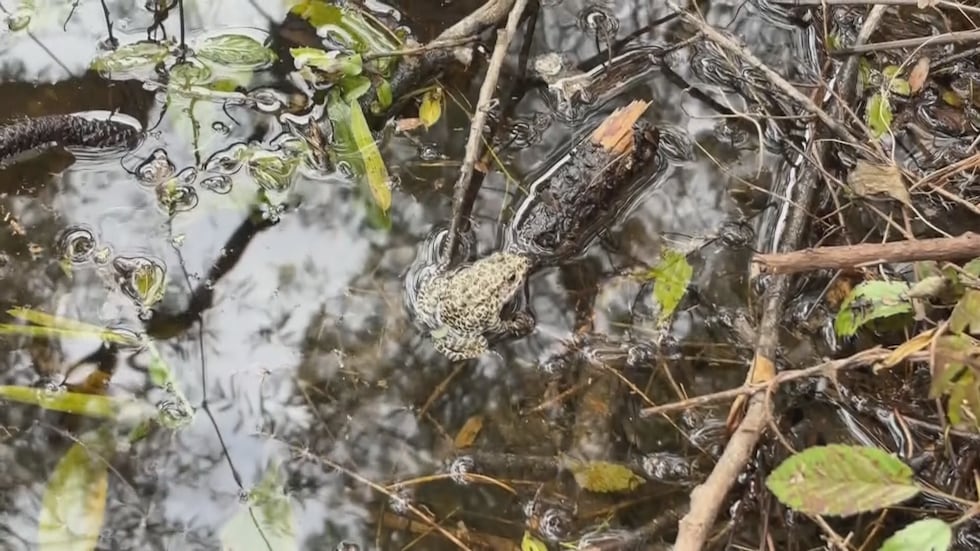
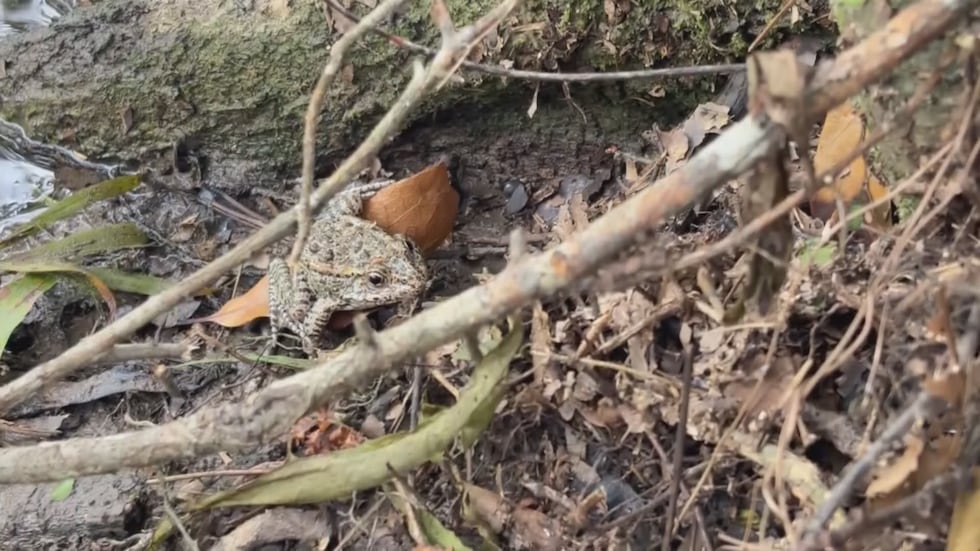
Hancock County, Miss. (WLOX) — Hundreds of endangered dusky gopher frogs were released in Hancock County, marking the first time in decades the species has returned to the area.
Nearly 500 zoo-bred frogs raised through the Memphis Zoo’s conservation program were released into restored wetlands on private property near Picayune.

The release represents the first expansion beyond the original release area at Ward Bayou Wildlife Management Area, where conservation partners have spent nearly nine years building a population.
Conservation milestone
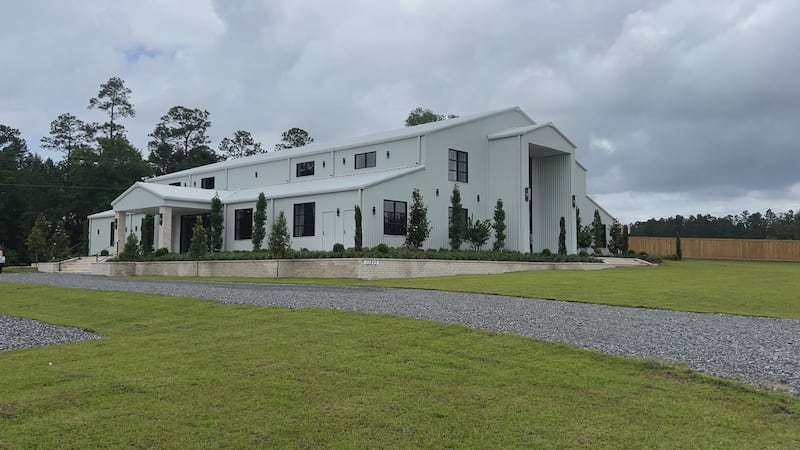
Property owner Jim Currie said a conservation easement was placed on the land last year under the USDA agricultural land easement program.
“It feels doubly good to know that not only they’re getting introduced, but they’re getting introduced into an environment that should be theirs forever,” Currie said.
Steve Reichling, director of conservation and research at the Memphis Zoo, said the expansion is critical for the species’ survival.
“Frog populations’ existence is always really tenuous. Any kind of bad... a hurricane, a forest fire, a disease, anything like that could wipe out that individual population,” Reichling said. “So what we try to create is metapopulations, which are a network of these individual, vulnerable populations. And by doing that, if one population has trouble, declines, even disappears, well, there’s resiliency in all the others.”
Population growth
Scientists estimate about 500 to 600 breeding adults are now spread across 15 locations. Not long ago, only one population was breeding in the wild.
John Tupy, a U.S. Fish and Wildlife Service biologist, said conservation efforts have provided crucial knowledge about the species.
“From everything from the habitat management to the breeding and larval development, we’ve figured all those things out,” Tupy said. “Not to say we know everything about the frog, but we know enough to know what they need and what they want, and for them to kind of thrive.”
Habitat loss
Scientists believe the frogs vanished from Hancock County decades ago due to habitat loss, development and fire suppression.
Robert Smith, Wildlife Mississippi coastal program coordinator, said longleaf habitat has declined dramatically across the Southeast.
“There were once 90 million acres of this longleaf habitat scattered across the Southeast and now there’s less than 6 million acres,” Smith said. “Without this habitat, the species that depend on it like the dusky gopher frog, the Mississippi sandhill crane, the red cockaded woodpecker, the black pond snake will disappear.”
Reichling said private landowners will be essential to recovery efforts.
“As with any endangered species, it’s going to have to involve private landowners,” Reichling said. “There’s just not enough public land for most threatened and endangered species to where that’s the solution.”
Recovery plans call for several separate, self-sustaining populations before the species can be considered for removal from the endangered species list. Conservationists say the new Hancock County release site could begin producing frogs of its own within the next two to three years.
See a spelling or grammar error in this story? Report it to our team HERE.
Copyright 2026 WLOX. All rights reserved.